
深度学习
Finden works directly with clients on short commissioned projects and is also actively engaged in long-term research collaborations with clients and partners worldwide. We possess extensive expertise in developing and implementing cutting-edge deep learning approaches, which we offer as commercial services. Our proficiency extends to various applications, including object detection, super resolution, spectral analysis, and data denoising. Below are examples of our published research findings.
Further case studies include:
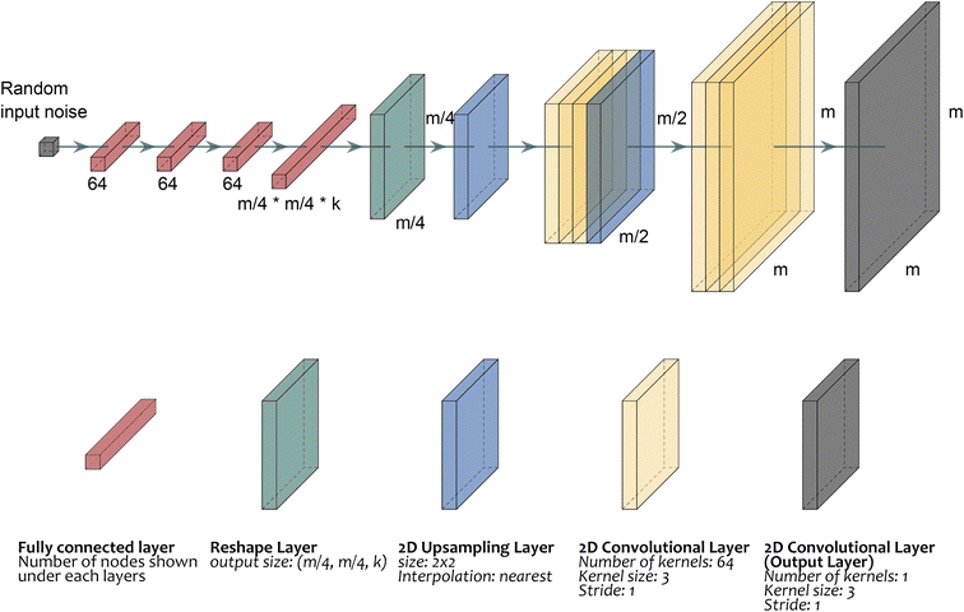
Recent advancements in X-ray sources and detectors have led to the collection of rapid time-resolved data from various positions within a sample or sample ensemble through time-resolved imaging/tomography experiments. However, the large volume and fast acquisition of data present challenges for traditional image reconstruction and analysis methods. The current limitations in chemical imaging techniques often arise from the need for dense sampling in sinograms to achieve high-quality image reconstructions. There is a requirement for algorithms that can enhance reconstruction with sparsely sampled sinograms, enabling the attainment of higher levels of spatial and temporal resolution in chemical imaging. We present a lightweight and scalable artificial neural network architecture which is used to reconstruct a tomographic image from a given sinogram.
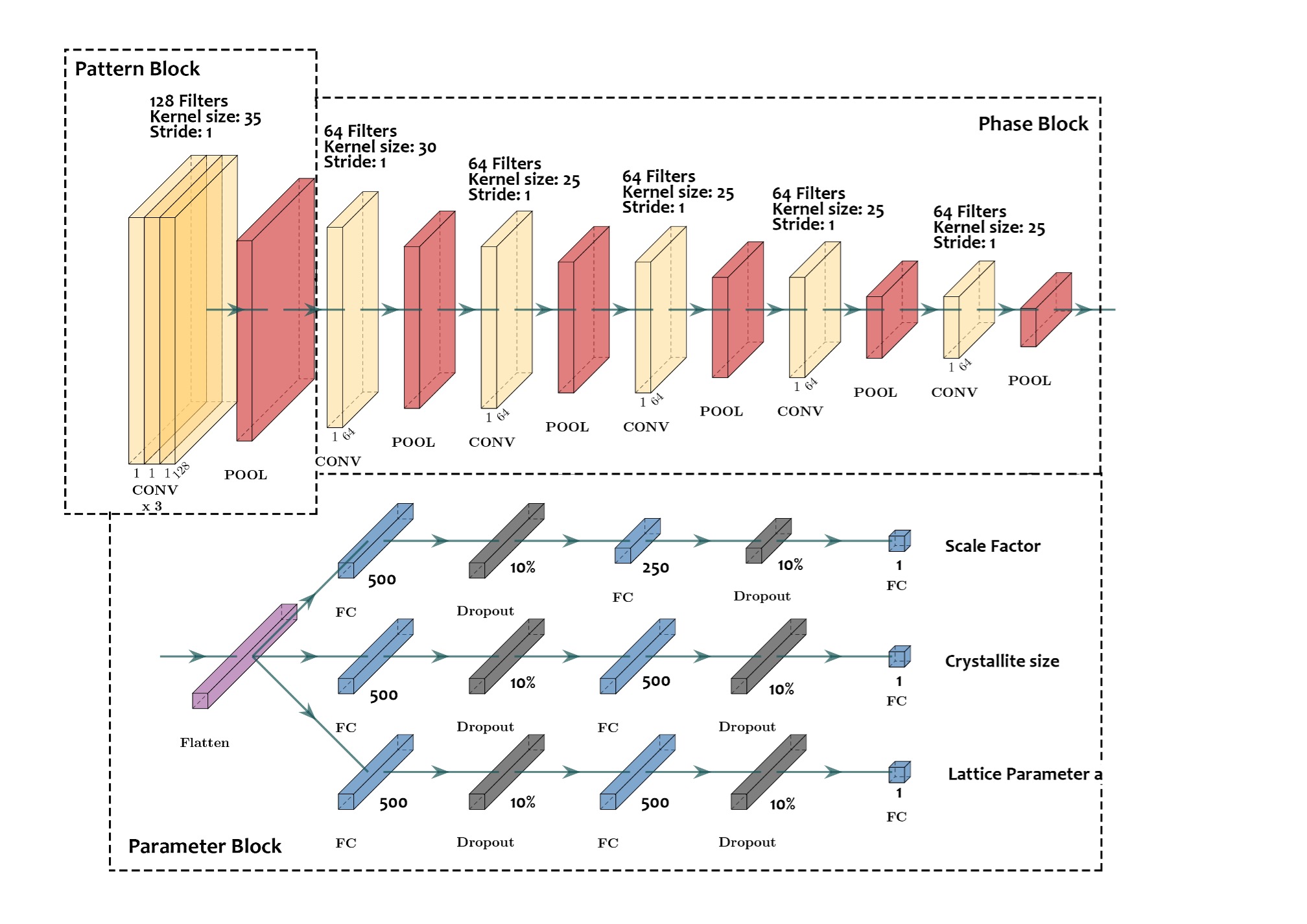
Over the past decade, advancements in X-ray sources, optics and detector technologies have led to a dramatic increase in the volume and data quality of experimental powder diffraction patterns. These technical advances are beginning to make high-throughput powder diffraction measurements a reality not just at synchrotron facilities but also at the laboratory. It is currently well-accepted that it is the data analysis that is emerging as the bottleneck for measurement science and not the data acquisition and/or the experiment itself. Conventional data analysis methods, such as least-squares minimisation approaches, are not able to keep up with the data collections rates and there is a need for alternative methods which can provide both fast and accurate results. We have developed the Parameter Quantification Network (PQ-Net), a regression deep convolutional neural network providing quantitative analysis of powder X-ray diffraction patterns from multi-phase systems.

Parallax artefacts in X-ray powder diffraction computed tomography (XRD-CT) present significant challenges for accurately capturing physicochemical data from large samples. These artefacts, seen as peak shifting, broadening, and splitting in diffraction patterns, can lead to incorrect measurements of properties such as lattice parameters and crystallite sizes. Previously we developed a direct least-squares reconstruction (DLSR) algorithm to address this issue. However, that method required detailed chemical knowledge of the sample and was computationally intensive, making it unsuitable for large datasets increasingly common in modern research, particularly those acquired at synchrotron facilities.
Read more about our team and publications.